A Readymade Object Was Introduced and Part of Which Art Style?
What is Readymade Fine art?
Readymade art, or readymade, is the term used to describe fine art that is created from found objects. These objects are often modified by the artist and amplify the non-art quality of the original object without disguising its utilitarian purpose. Readymade art challenged the conventions of Western art past questioning what kinds of objects were worthy of being labeled as art and whether or not those objects were suitable for museum and gallery exhibition.
Notable Readymade Artwork
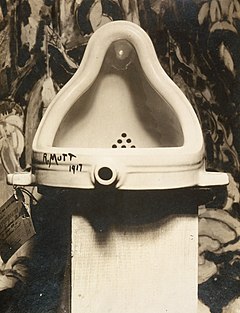
Marcel Duchamp, Fountain, 1917, Tate Modern, London
https://www.tate.org.britain/fine art/artworks/duchamp-fountain-t07573
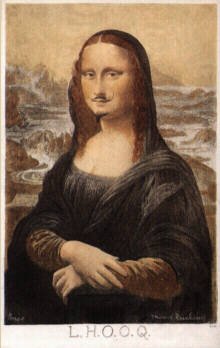
Marcel Duchamp, L.H.O.O.Q., 1919, Norton Simon Museum, Pasadena, California
https://www.nortonsimon.org/art/detail/P.1969.094
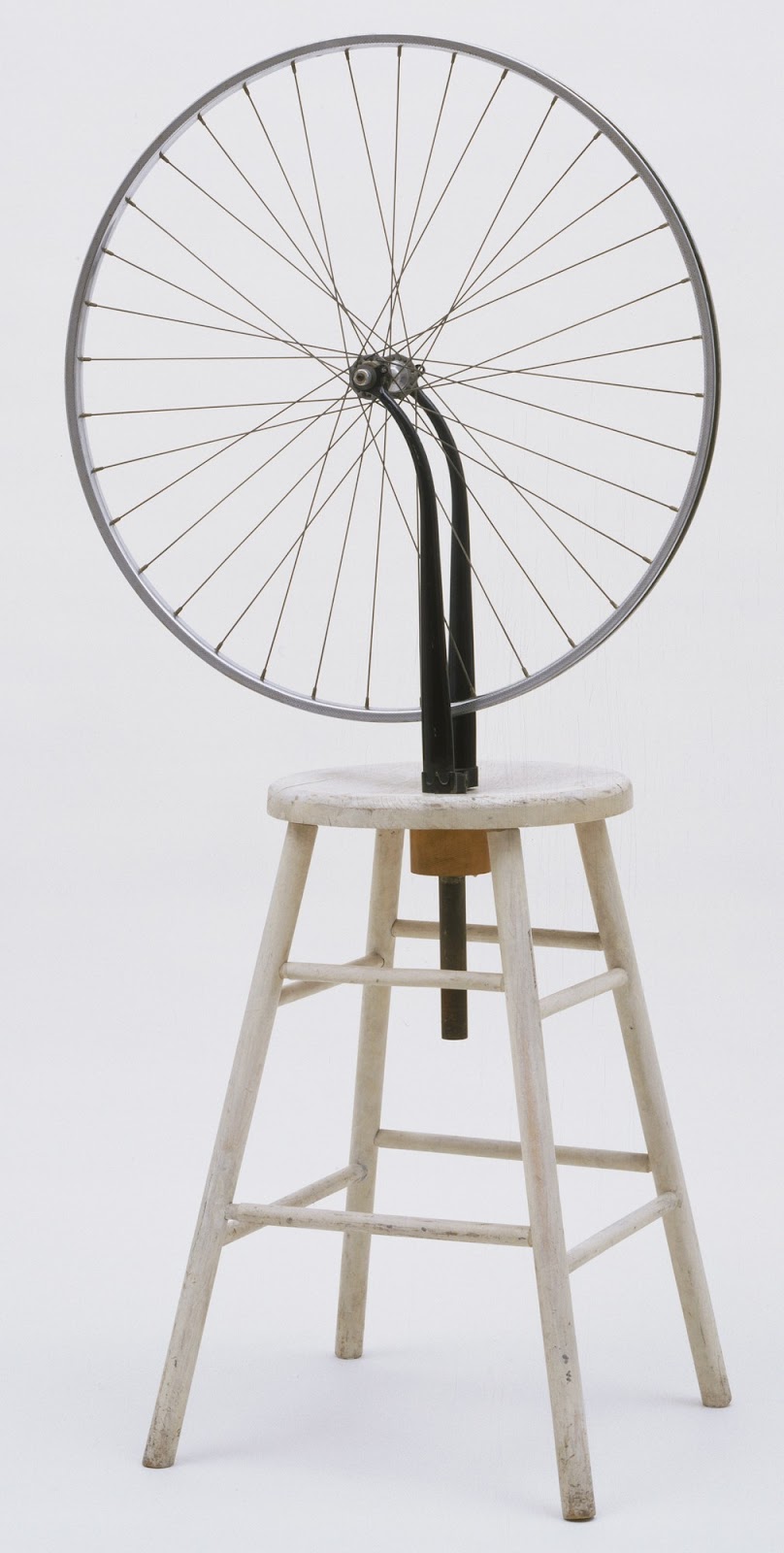
Marcel Duchamp, Wheel Cycle, 1951 (3rd version, later lost original of 1913), Museum of Modern Art, New York City
https://world wide web.moma.org/drove/works/81631
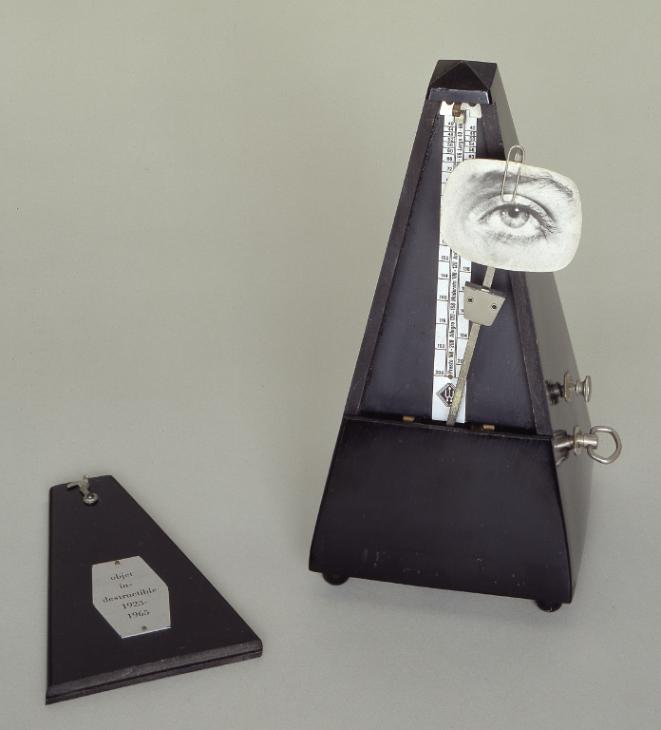
Man Ray, Indestructible Object (or Object to Be Destroyed), 1923 (remade in 1933, editioned replica in 1964), Tate Modern, London
https://www.tate.org.uk/art/artworks/human-ray-indestructible-object-t07614
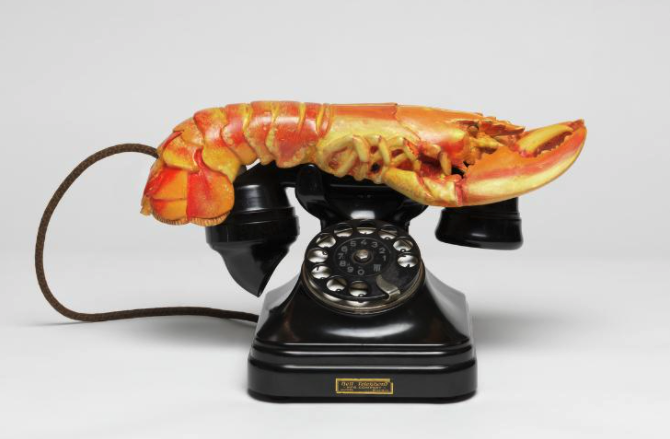
Salvador Dali, Lobster Telephone, 1938, Tate Modern, London
https://www.tate.org.uk/fine art/artworks/dali-lobster-phone-t03257
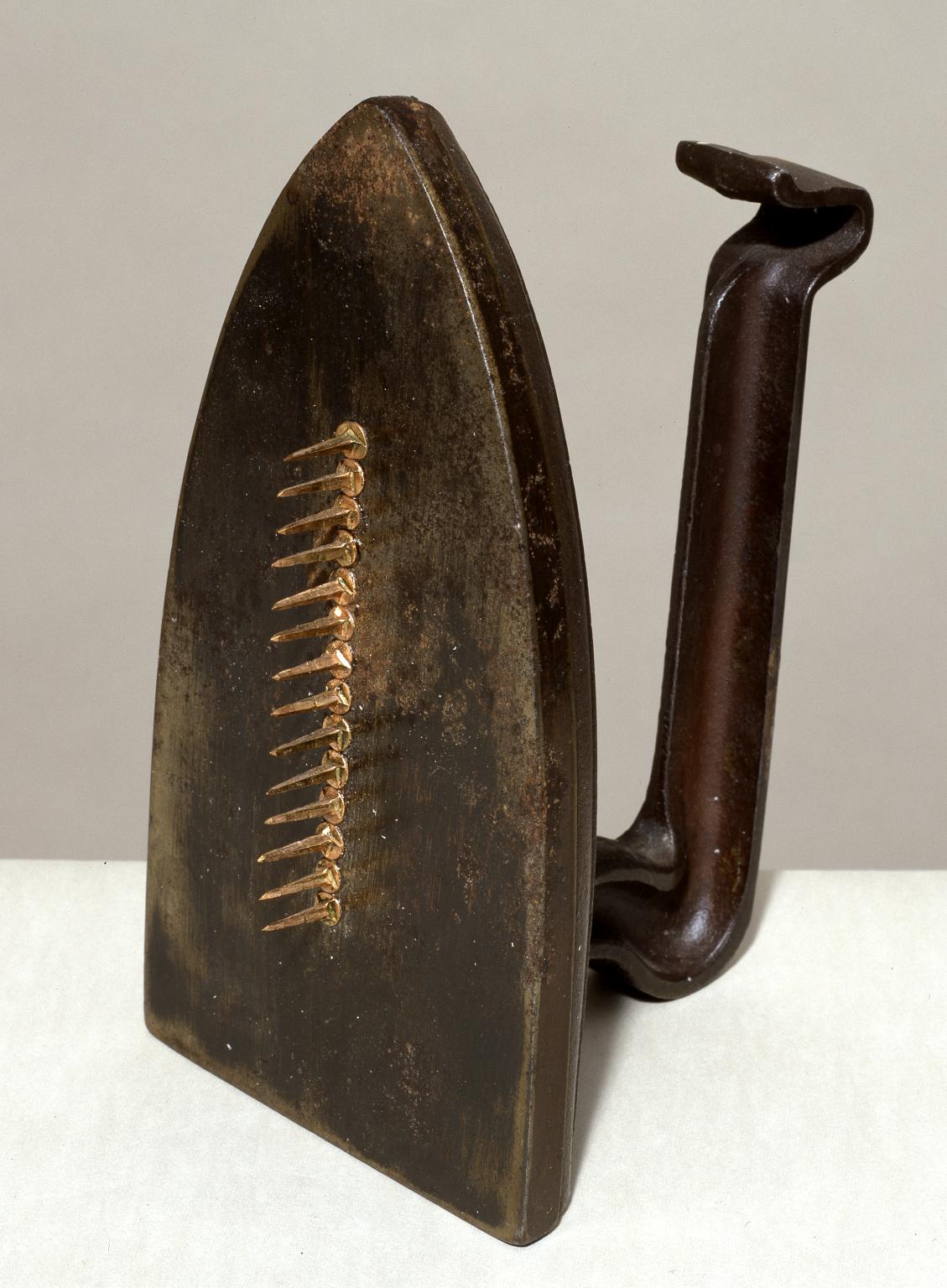
Man Ray, The Gift (Cadeau), 1921, Tate Modern, London
https://world wide web.tate.org.uk/art/artworks/man-ray-cadeau-t07883
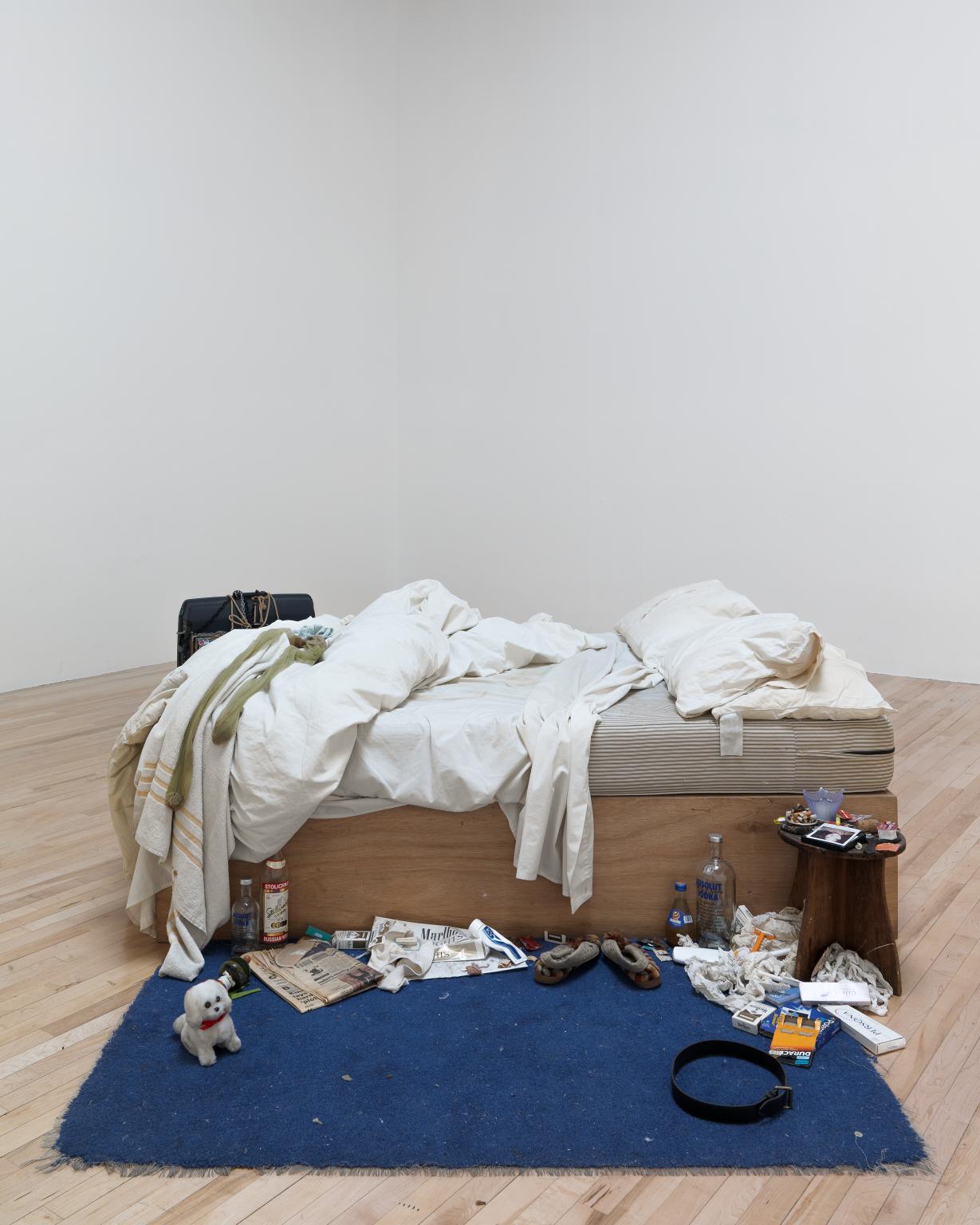
Tracy Emin, My Bed, 1998, Tate Modern, London
https://www.tate.org.britain/art/artworks/emin-my-bed-l03662
History of the Readymade
Using everyday objects in art became popular in the early twentieth century around the fourth dimension of the Starting time Earth War. Effectually 1912, Cubist artists Pablo Picasso and Georges Braque began incorporating objects like newspapers, wallpaper, matchboxes and canteen labels into their collages and sculptural pieces. Cubist collage frequently resembled sculpture and the motility itself ran concurrently to Dadaism.
Readymades are widely attributed to the Dadaist art movement. The term ready-fabricated was coined in 1915 by French artist Marcel Duchamp. Ready-made, at present more commonly referred to as readymade, was used by Duchamp in a very specific way: To depict an everyday object that was chosen for its use every bit an art object and was not altered in any significant manner. Alterations included adding or removing elements of unlike objects to create a new object that resembled a sculpture.
The readymade challenged the notion that art had to be unique to be considered art. Since the objects called by artists were mostly mass produced, the question became one of originality versus ownership. Could a mass produced object exist considered a work of art? To many Dadaists the answer was yeah, considering their goal was to trouble the purist notion of art handed down past European fine art academies. Instead of technical skill, selection, originality and concept were foundational concepts of readymade product. The artist developed the concept for the artwork and then chose the object that aligned with and amplified the concept.
The readymade was typically humorous and made use of visual puns. Jokes and visual puns were already an of import part of Dadaist fine art and the readymade expanded on the characteristically Dadaist satire and subversion of societal norms. Playing with notions of sense and meaning offered new means to retrieve about creative expression, fine art-making and the way the modern world functioned.
Readymades also sparked deeper reflection on human relationships with everyday objects. Placing a mundane, yet useful, object into a new and unexpected context shifted the viewer's perspective on both the object itself and the definition of art.
Marcel Duchamp'due south Readymades
Duchamp's Fountain, from 1917, became the almost iconic readymade piece of work in the history of mod art. Fountain is a porcelain urinal signed with the words "R. Mutt, 1917," where R. Mutt was the pseudonym later attributed to Marcel Duchamp. By taking a standard urinal and presenting it for exhibition, Duchamp (then unknown every bit R. Mutt) created a pregnant corporeality of controversy within the art world. Fountain was initially rejected by the Society of Independent Artists and an exhibition at the M Cardinal Palace, deemed inappropriate and eventually censored for its clan with actual waste. In 1917, Fountain was not considered to exist a work of fine art by anyone other than the artist and his Dadaist colleagues.
Fountain's censorship led Duchamp and young man Dadaists to form their own means for publication and exhibition of their artwork. The Blind Man, for instance, was an advanced magazine published past Dadaist artists. From there, the readymade was embraced by other Dada and Surrealist artists such as Man Ray and Salvador Dalí. The readymade continued as a rejection of nineteenth century painting and an superlative of mass produced objects to the level of fine art. Readymades also fueled an ongoing debate within the art earth nearly whether or not everyday objects could exist art. This debate later evolved to include whether or not an idea alone could exist art, which was fundamental to Conceptual Art of the 1960s.
Dadaists were among the many avant-garde artists at the time who believed that art should challenge the viewer to exist disquisitional of mod life. Readymades such as Fountain redefined the notion of art equally something that was non intended to only be absorbed and enjoyed visually. Ideas and process became the most of import part of the artwork, where the final production symbolized a new perspective on the object itself. Fountain, once simply a urinal, was called and stripped of its part, forcing the viewer to rethink their ain beliefs almost what constituted art. The readymade gave art new meaning.
While Duchamp's Fountain is iconic, and easily i of the nearly recognizable readymades, his work Bicycle Wheel, from 1913, is ane of his earlier pieces and is widely considered to exist the first readymade work. Duchamp'due south Bicycle Cycle piece consists of disparate elements including a bicycle cycle mounted on a wooden stool. These ii objects have very different functions but gained new pregnant when placed into the context of art. Duchamp described this piece equally a "pleasant gadget" for the smooth motility of the wheel and overall minimal artful.
Types of Readymades
The term readymade was reserved for objects that were unaltered; a found object. Bottle Rack, from 1914 is some other iconic readymade by Marcel Duchamp. Duchamp just chose the bottle rack for its appearance and deemed information technology to exist an "already made" piece of work of art. This ordinary object, when not in utilise, resembled a sculpture and was not altered in any mode.
Every bit the readymade grew in popularity, various sub-classifications, such as assisted readymade emerged. Assisted readymades were created by putting multiple readymades together, eliminating any possibility of using them for their original role. Duchamp's Bicycle Wheel looks similar an original sculpture, merely is a combination of objects that were once functional in their ain right. A bicycle is mounted on the seat of a wooden stool, removing the possibility of using the bike and the power to sit on the stool.
Rectified readymades were only slightly altered or marked. Duchamp'due south Fountain is a prime example of a rectified readymade, as the only modification to the original object is R. Mutt'southward signature and the corresponding year. Duchamp's work, In Advance of the Broken Arm, from 1915, is a snow shovel that bears the words "from Marcel Duchamp 1915" as its only alteration. Many art historians share conflicting views on whether even the slightest modification, such as a signature, changes the classification of a readymade to a rectified readymade.
Reciprocal readymade practical to unique works of art that were mass produced as utilitarian objects, a consummate reversal of the original notion of the readymade. L.H.O.O.Q., from 1919, is Marcel Duchamp'due south reproduction of Leonardo da Vinci's Mona Lisa. Duchamp altered the affiche by cartoon a mustache and goatee on the Mona Lisa's face up and the letters "50.H.O.O.Q.," a crude French pun, below the portrait. Its poster-like quality made this readymade piece of work hands reproducible as a work of art in and of itself.
Influence of Readymade Art on Later Movements
The all-encompassing use of found objects central to readymade fine art was cardinal to Dadaism and was later on embraced by Surrealist artists and Pop artists. Many artists have since used institute objects in their work to comment on the role of the artist versus the function of the museum.
While the readymade was initially developed to challenge the definition of art itself, themes addressed by readymades take since expanded to include explorations of life, death, relationships, psychology and consumerism. The late twentieth century saw a number of artists challenging mass cultural production and lingering class distinctions. The readymade was a versatile medium that had the potential to be amusing and satirical while problematizing issues that had a pregnant impact on modern society.
In the late twentieth century, artists such as Joseph Beuys, Jasper Johns and Robert Rauschenberg adopted the ideas of Dadaism and used found objects in their creative practices. Often regarded as Neo-Dadaists, these artists adopted the concept of the readymade and challenged material hierarchies along with the ever-irresolute, still however quite traditional, human relationship between art and gallery spaces.
In the 1960s, Pop Fine art often used mass produced objects to critique mass product itself, along with pop culture and advertisement. Fluxus and Conceptual Art were also deeply influenced past the ability of everyday objects and the ability of the idea, concept, or process, becoming the work of fine art.
Towards the beginning of the twenty-beginning century, groups such equally the Young British Artists (YBA) reimagined the readymade by championing the idea that an object becomes fine art only one time the artist proclaims it every bit such. The YBAs overlooked the notion that artistic skill and technique are the foremost indicators of art. YBA members such as Tracy Emin and Damien Hirst took objects out of their original contexts, such as the artist's messy bed or taxidermy animals, and placed them in a gallery setting, shocking audiences and critics alike. YBAs rejected fine art materials and ofttimes favored the artistic intention or concept over the final piece itself.
In the context of contemporary art, readymades continue to recontextualize everyday objects, becoming satirical, and often poetic, symbols of critical conversations between the artist and the art world, society and history.
Notable Readymade Artists
- Marcel Duchamp, 1887-1968, French
- Human being Ray, 1890-1976, American
- Salvador Dali, 1904-1989, Spanish
- Tracey Emin, b. 1963, English
- Jasper Johns, b. 1930, American
- Joseph Kosuth, b. 1945, American
- Nam June Paik, b. 1932, Korean-American
- Damien Hirst, b. 1965, English
- Rachel Whiteread, b. 1963, English
- Robert Rauschenberg, 1925-2008, American
Related Fine art Terms
- Dadaism
- Surrealism
- Photography
- Cubism
- Found Object
- Assemblage
- Avant-garde
- Conceptual Art
- Postmodernism
- Collage and Papier Collé
- Fluxus
- The Uncanny
- Minimalism
Source: https://www.artlex.com/art-terms/r/readymade/
0 Response to "A Readymade Object Was Introduced and Part of Which Art Style?"
Post a Comment